Use a structured chart of accounts for assets, liabilities, equity, income and expenses. Create parent and child accounts and control account status.
Maintain accounting records arising from sales, purchases, payments, taxes and expenses. Exact automation behavior should be described only after product verification.
Create balanced journal entries with dates, references, debit and credit lines. Track draft, posted and reversed states while preserving an audit history.
Create bank account records, review opening balances and see account-level balance information. Use bank accounts in applicable payment workflows.
Review tax periods, filing status, workflow status, amount due, paid amount, outstanding amount and relevant payment dates when records are available.
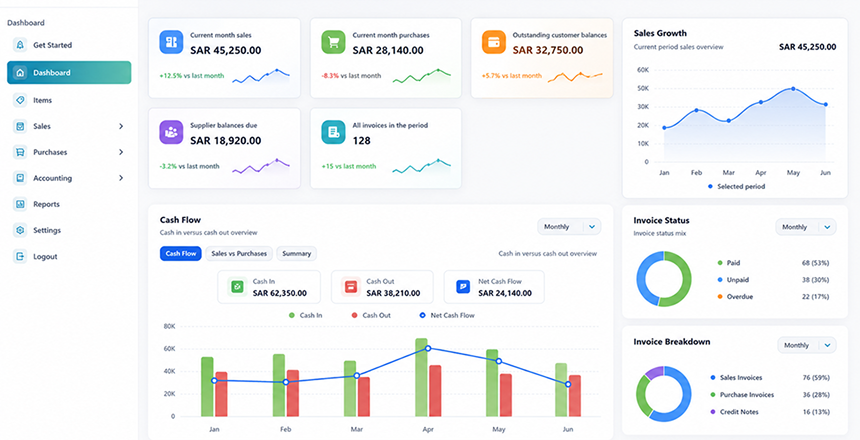
Access trial balance, general ledger, account ledger summaries, journal reports, balance sheet, profit and loss, and cash flow reports.
Use defined statuses, permissions and transaction history to support internal review. Do not promise statutory audit compliance unless separately verified.
Manage accounts, journals, banking and reports alongside the transactions that create them.