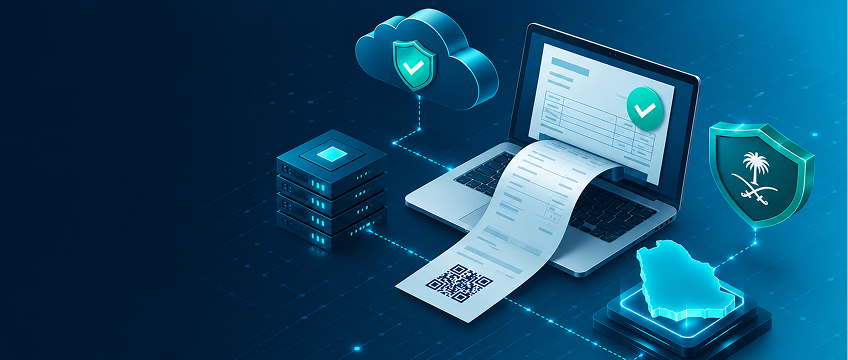
ZATCA E-Invoicing Requirements in Saudi Arabia:
What Businesses Need to Know
E-invoicing has changed the way businesses in Saudi Arabia
create, manage, and report invoices. As part of the
Kingdom’s digital transformation and Vision 2030, the
Zakat, Tax and Customs Authority (ZATCA) has introduced
e-invoicing requirements for businesses subject to VAT.
For businesses, moving from traditional paper or manually
prepared invoices to an approved electronic invoicing
system is more than a technology upgrade. It is an
important step toward better financial management,
accurate records, and compliance with Saudi tax
requirements.
But what exactly are the ZATCA e-invoicing requirements
in Saudi Arabia? What should businesses prepare before
implementing an e-invoicing solution? Let’s explore the
key points.
What Is ZATCA E-Invoicing?
ZATCA e-invoicing refers to the electronic generation,
storage, and processing of invoices in accordance with
the requirements set by ZATCA.
An e-invoice is not simply a PDF or an invoice sent by
email. It is generated through an electronic system that
follows specific technical and business requirements.
The goal is to move businesses toward a more structured
invoicing process while giving ZATCA better visibility
into taxable transactions.
Who Needs to Follow ZATCA E-Invoicing Requirements?
Businesses that are subject to Saudi VAT generally need
to comply with the applicable e-invoicing requirements.
This can include:
-
Small and medium-sized businesses
-
Trading companies
-
Contracting companies
-
Retail businesses
-
Service companies
-
Professional service providers
-
Other VAT-registered businesses operating in
Saudi Arabia
The specific requirements and implementation timelines
can depend on the type of taxpayer and the applicable
ZATCA phase.
What Are the Main ZATCA E-Invoicing Requirements?
Understanding the basic requirements can help businesses
prepare their invoicing systems correctly.
1. Use an Electronic Invoicing Solution
Businesses need an electronic invoicing system capable
of generating invoices according to ZATCA requirements.
Manual invoices and traditional paper-based processes
are not suitable for meeting the requirements of
electronic invoicing.
A suitable solution should support the required invoice
formats, data fields, security controls, and integration
requirements.
2. Include Required Invoice Information
A compliant electronic invoice needs to contain the
required business and transaction information.
Depending on the invoice type, this may include
information such as:
-
Seller details
-
Buyer details
-
VAT registration information
-
Invoice number
-
Invoice date
-
Description of goods or services
-
Quantity and prices
-
VAT amount
-
Total invoice value
-
Other required invoice information
Businesses should configure their invoicing system
correctly so that required information is captured
during invoice creation.
3. Follow the Applicable Invoice Format
ZATCA requirements can differ based on the type of
transaction and invoice.
Businesses may deal with different types of invoices,
such as standard tax invoices and simplified tax
invoices.
Your invoicing solution should support the appropriate
format and requirements for the transactions your
business handles.
4. Maintain Electronic Records
Businesses need to maintain their invoicing records
electronically and keep the required information
available for the applicable retention period.
Moving to electronic invoicing can make it easier to
organize, search, and retrieve invoice records compared
with traditional paper-based systems.
Businesses should also make sure their systems have
suitable access controls and backup processes.
5. Connect With ZATCA Requirements for Phase 2
Phase 2 of Saudi Arabia’s e-invoicing program introduced
additional integration and technical requirements.
Under the integration phase, businesses need to connect
their electronic invoicing solution with ZATCA’s systems
according to the requirements applicable to them.
This means businesses need more than basic
invoice-generation software. Their solution must be
technically prepared for the applicable integration
requirements.
Why Is ZATCA E-Invoicing Important for Businesses?
E-invoicing can bring several practical benefits to
businesses beyond compliance.
Better Invoice Management
Digital invoices are easier to create, organize, search,
and manage. Businesses can reduce their dependence on
paper records and manual processes.
Fewer Manual Errors
Automated invoice creation can reduce common mistakes
related to calculations, invoice numbers, tax values,
and customer information.
Faster Business Processes
Electronic invoicing can help businesses speed up
billing and reduce the time employees spend preparing
and managing invoices manually.
Better Financial Visibility
When invoices are stored digitally, businesses can have
a clearer view of sales, VAT amounts, outstanding
invoices, and transaction records.
Improved Business Efficiency
Connecting invoicing with accounting, ERP, or other
business systems can reduce duplicate data entry and
create a smoother financial workflow.
How Can Businesses Prepare for ZATCA E-Invoicing?
Preparing early can make the transition easier.
Businesses should start by reviewing their current
invoicing process and identifying areas that need
improvement.
Here are some practical steps:
Review Your Current System
Understand how invoices are currently created, stored,
and managed.
Choose the Right E-Invoicing Solution
Select software that supports the requirements
applicable to your business.
Check Your Business Information
Make sure VAT and company information used in invoices
is accurate.
Review Integrations
If you use accounting or ERP software, check whether
the e-invoicing solution can work with your existing
systems.
Train Your Team
Employees responsible for sales, accounting, and
invoicing should understand the new process.
Test Before Implementation
Testing can help identify invoice, integration, and
data issues before they affect daily operations.
Choose the Right E-Invoicing Solution With Tadeed
ZATCA e-invoicing is an important part of doing business
in Saudi Arabia. The right technology can make the
transition easier while helping businesses manage
invoices more efficiently.
At Tadeed, we help businesses identify
practical technology solutions that fit their
operational needs. Our technology and digital solutions
are designed to help businesses improve their systems,
simplify processes, and prepare for changing business
requirements.
Whether you operate a
trading company, contracting business, service
company, retail business, or professional services
firm
,
having the right e-invoicing setup can make a
significant difference.
Instead of relying on manual invoicing processes,
businesses can move toward a more organized,
digital approach.
Ready to move your business toward compliant
e-invoicing?
Contact Tadeed to discuss the right e-invoicing
solution for your business in Saudi Arabia.